
Summer 2026-“I Thought This River Was Dead”
Updated: Aug 15
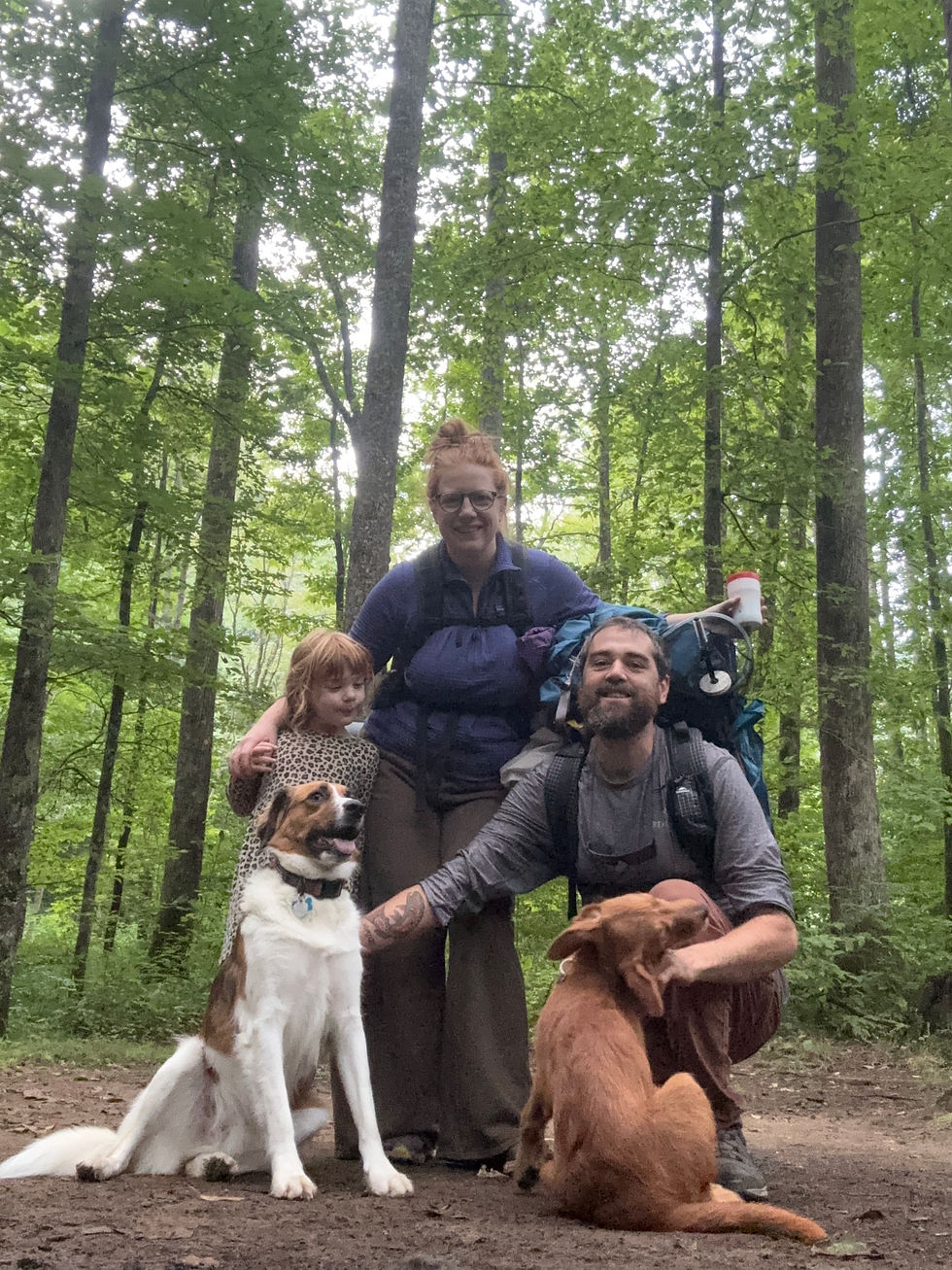
Here I am, sitting in a tent with my wife, my four-year-old daughter, and our two dogs—Trout and River Dog—when my mind starts to wander. I think about what these mountains will look like 20 years from now.
I imagine my daughter exploring these same river trails in Western North Carolina as a young adult, full of experience and confidence. But I also wonder: what will the rivers be like? Will they still hold fish?

With everything going on in the world, it can be easy to assume the worst. But the more time I spend along these rivers, the more I see signs of life coming back.
I’m camping along the East Fork of the Pigeon River, a watershed that has taken a serious beating over the last decade—first from Hurricane Fred and then again just a few years later, from Helene.
Since Helene, I honestly haven’t spent much time here. Like a lot of people, I had almost written it off as decimated and unfishable.
But between making freeze-dried risotto and roasting s’mores with my daughter, I managed to sneak away and fish a quick stretch of river.
There was no picking and choosing the best-looking water. I just fished what was in front of me.

Like many rivers after major flooding, the East Fork is wider now, shallower in places, and missing many of the pockets and holding water that were once here. But anywhere I found a rock, a small drop, or enough depth for a trout to tuck into - I found fish.
I didn’t land a single one. But I had at least half a dozen strikes on a Sakasa Kebari before heading back to camp. And somehow, that was enough…
It reminded me of another experience I had recently while guiding on the West Fork of the Pigeon River.
The West Fork has heavily fished delayed-harvest sections that are stocked for much of the year. Once those fish become harvestable in the summer, anglers flock to the river to take their limit. By late July, stretches that were packed with trout only weeks earlier can feel almost completely empty.
So when I took a group there in the middle of August, I didn’t have high expectations. We had limited time, though, and it seemed like the perfect place to teach the basics of fixed-line fishing.

What happened completely surprised me. I started finding small wild trout—and at times we were getting into them nearly every cast.
They weren’t native brook trout, and they weren’t the big stocked fish people usually associate with that stretch. They were small, feisty wild trout living in a river I had assumed would be nearly devoid of fish. It immediately sparked my curiosity.
If wild trout can begin filling those spaces so quickly when given the opportunity, what would these pristine delayed-harvest waters look like if they weren’t stocked so heavily in the first place? What would happen if they weren’t attracting such intense fishing pressure year after year?
How quickly could a stream like this fill back up with wild life? Both experiences left me thinking about the same thing. These fish are remarkably persistent. Give them cold, clean water, good habitat, and enough time, and they will find a way.

Years ago, when I first moved here, I was always told how well the East Fork used to fish. After decades of poor forest practices, major floods, and changing habitat, it’s easy to focus on everything these rivers have lost.
But maybe recovery doesn’t always start with something dramatic. Sometimes it starts with a 4” inch trout tucked behind a rock.
I’m looking forward to the day when I get to see the East Fork thriving again myself—and hopefully, 20 years from now, my daughter will too.
A Few Things Coming Up
NC Hellbender Festival -
September 5 | Spruce Pine, NC

A free, one-day festival celebrating clean rivers, outdoor recreation, local makers, and one of Appalachia’s coolest residents—the hellbender. A great excuse to spend the day in Spruce Pine and celebrate the rivers that make this place special.
Women’s Tenkara Gathering -
September 10–13 | Brevard, NC

A weekend focused on getting more women on the water to learn, fish, and build confidence with Tenkara. Expect stream-side instruction, local fishing, aquatic insect education, reading water, and Tenkara basics. Camping will be based at Kuykendall Group Campground, with additional instruction at Tuxedo Falls.
Community Social Sept.11
Headwaters Outfitters in Rosman |
Open to Everyone - 5:30pm–close
Even if you aren’t attending the full gathering, come hang out, meet other anglers, talk fishing, and support a local women-owned fly shop and taproom.
More info:
Tippet Clipper/Collector

Lastly - I’ve been developing a small tool that cuts and captures loose tippet at the same time, helping keep tiny pieces of fishing line off the riverbank.
It’s still a work in progress, with plenty of testing and tweaking ahead, but the goal is simple—make it easier to leave absolutely nothing behind. I started a GoFundMe to help cover the cost of prototyping, materials, and getting the first batch made. If you’d like to help bring the idea to life, any support or even just sharing the project would mean a lot.
Support the project: https://gofund.me/97ec0d1e7


Comments